01
Keep valuable materials in use
Lead can be recycled repeatedly without losing performance, while recovered plastic can become new battery cases.

Have a used lead battery? Return it through a dedicated battery collection network—not household trash or curbside recycling.
Find a return optionRecycle right. Keep materials moving.
Your used lead battery is not waste—it is a source of valuable materials for the next generation of batteries. Returning it to a participating retailer helps keep lead, plastic and acid in a safe, closed-loop recycling system.
Consumer information adapted from Battery Council International.
Why your return matters
Lead batteries are designed to be collected, broken down and made into useful materials again.
01
Lead can be recycled repeatedly without losing performance, while recovered plastic can become new battery cases.
02
Dedicated collection keeps batteries out of household waste and sends them to specialized facilities with controlled processes.
03
On average, a new lead battery is made with about 80% recycled material—putting yesterday's battery back to work.
How to recycle
Most consumers can recycle a vehicle lead battery through a retailer, service center or dedicated recycling location.
Explore participating retailer linksConfirm that it is a lead battery. Different battery chemistries have different recycling journeys and should not be mixed.
Start with an auto-parts retailer, battery retailer or service center. Review the location's acceptance policy before you go.
Keep the battery upright and secure during transport. Ask the retailer about core-charge returns and any location-specific instructions.
Handle with care
If a battery is leaking, cracked, swollen or otherwise damaged, contact a retailer or appropriate local authority for instructions before moving it. Follow the battery manufacturer's guidance.
What happens next
At specialized recycling facilities, batteries are separated so lead, plastic and acid can enter controlled recovery processes.
Lead components are cleaned, melted and refined into material that can be used to manufacture new battery parts.
Polypropylene battery cases are washed, melted and formed into pellets that can become new cases and covers.
Battery acid can be neutralized and treated, converted into a useful compound, or reclaimed for use in new battery products.
Understanding core charges
A core charge is a deposit that may be added when you buy a new vehicle battery. When you return an eligible used battery, the retailer may refund the charge according to its policy and applicable state law.
Find a return option
BRRO will provide curated links to retailer store finders and recycling policies. Individual locations and acceptance terms are maintained by each retailer.
Public reporting
BRRO plans to publish aggregated collection and recycling results while protecting individual member information. These sample reports demonstrate six ways the public data could be presented.
Sample data for demonstration only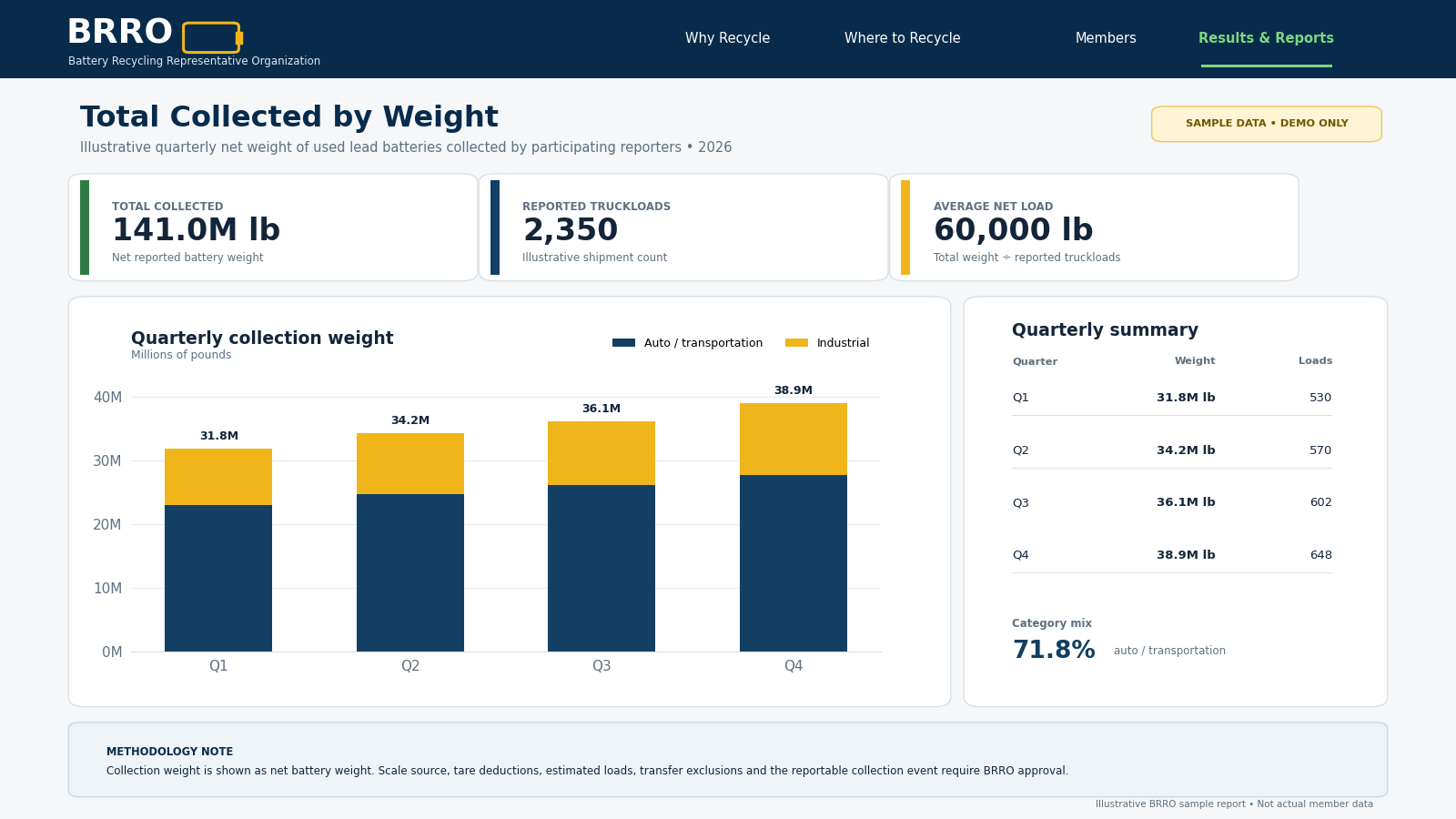 Open full report
Report 01
Illustrative quarterly collection totals, estimated truckloads and average load weight.
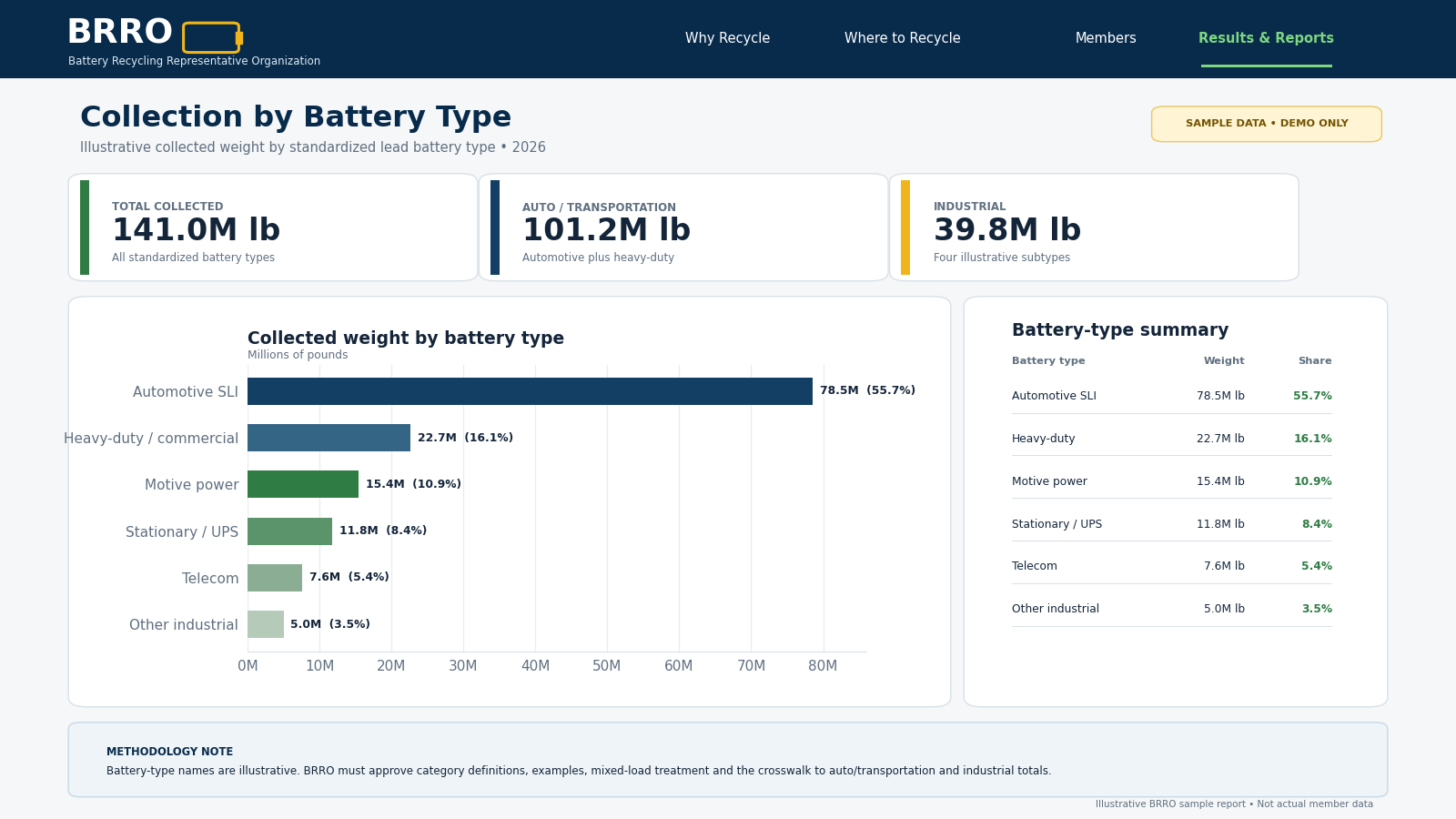 Open full report
Report 02
A sample comparison of auto and transportation batteries with industrial batteries.
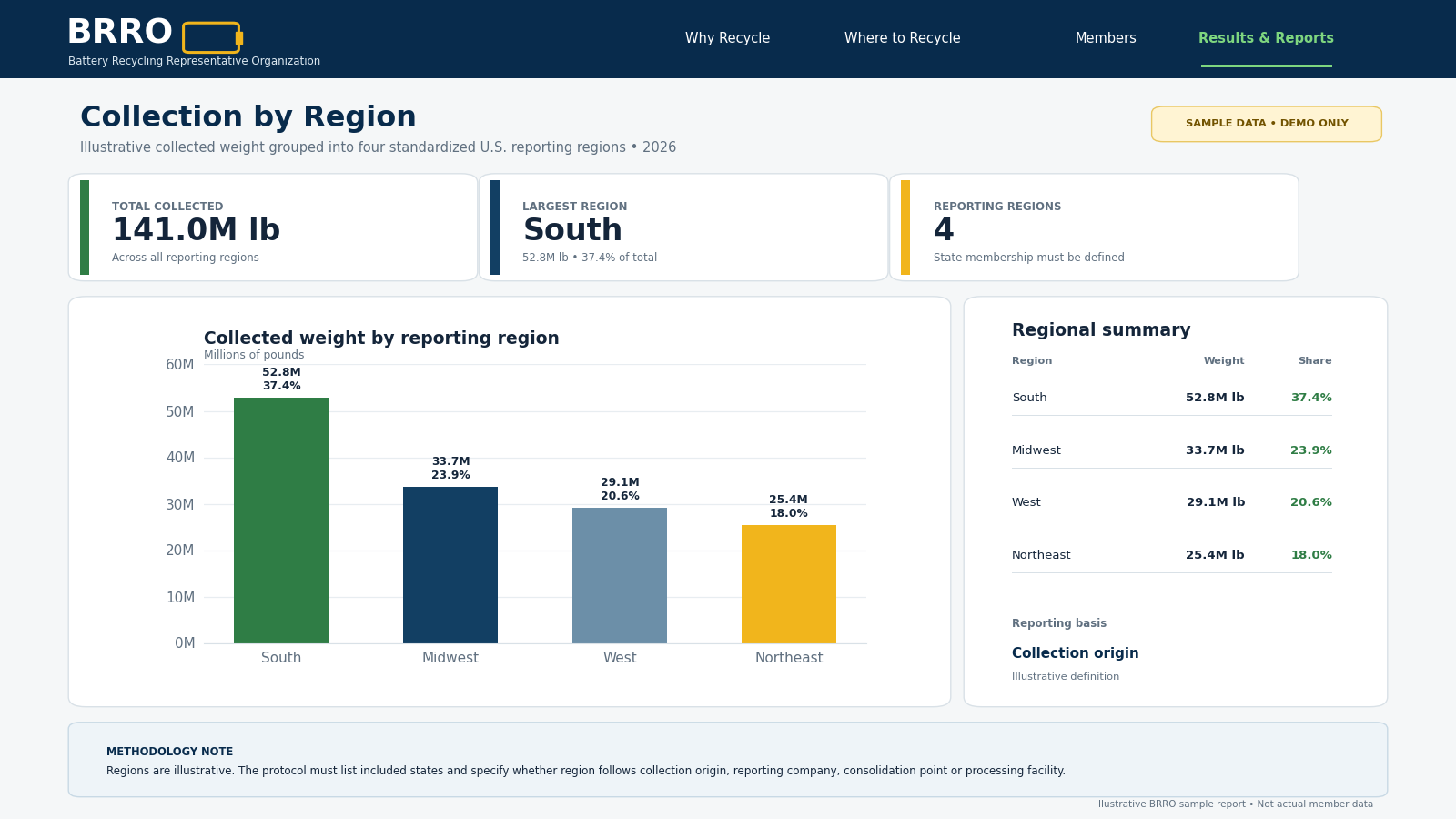 Open full report
Report 03
Illustrative collection totals for the Northeast, Midwest, South and West regions.
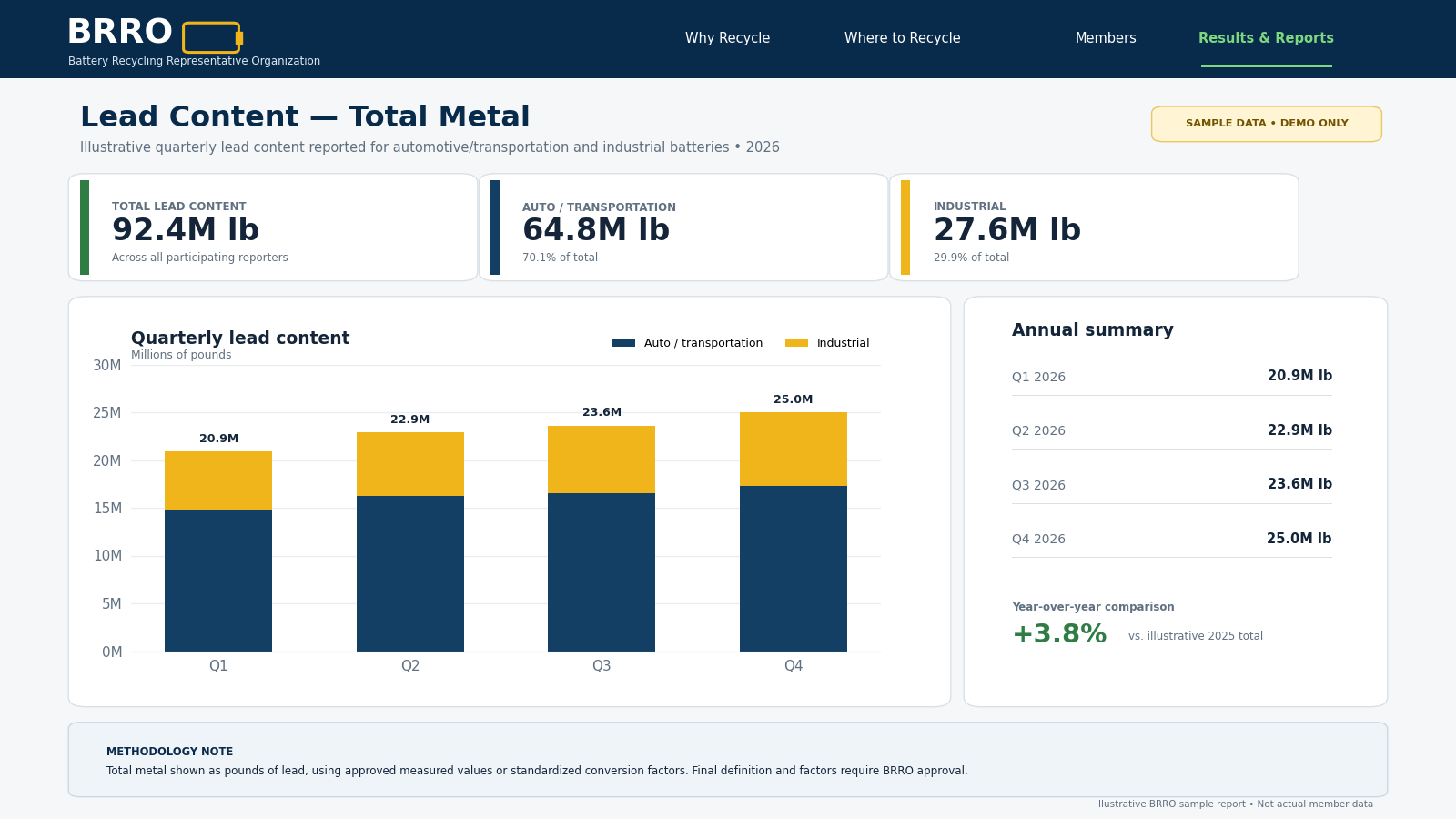 Open full report
Report 04
A sample annual summary of lead recovered, including quarterly and category breakdowns.
 Open full report
Report 05
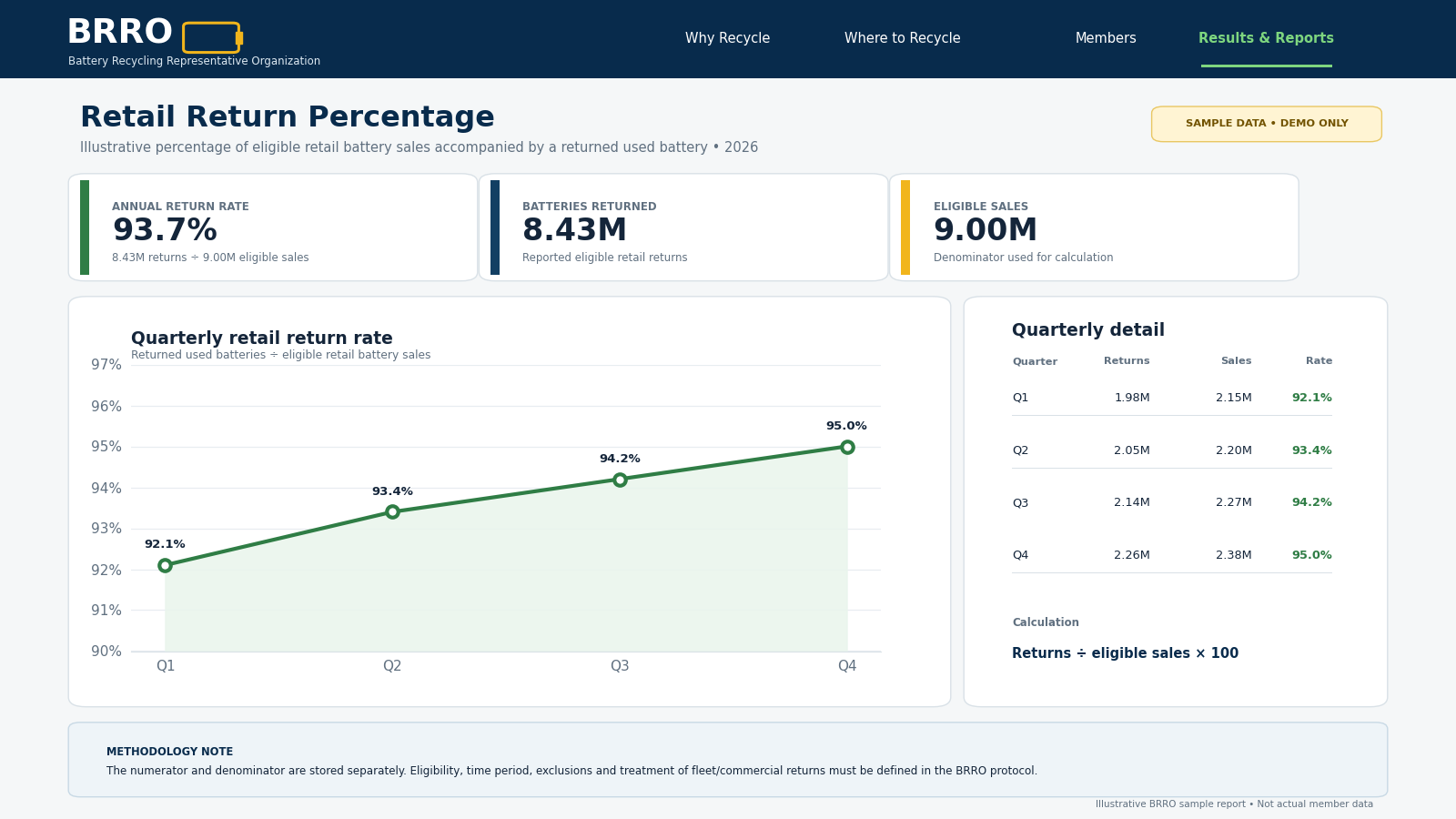
An illustrative return rate based on eligible retail sales and batteries returned.
 Open full report
Report 06
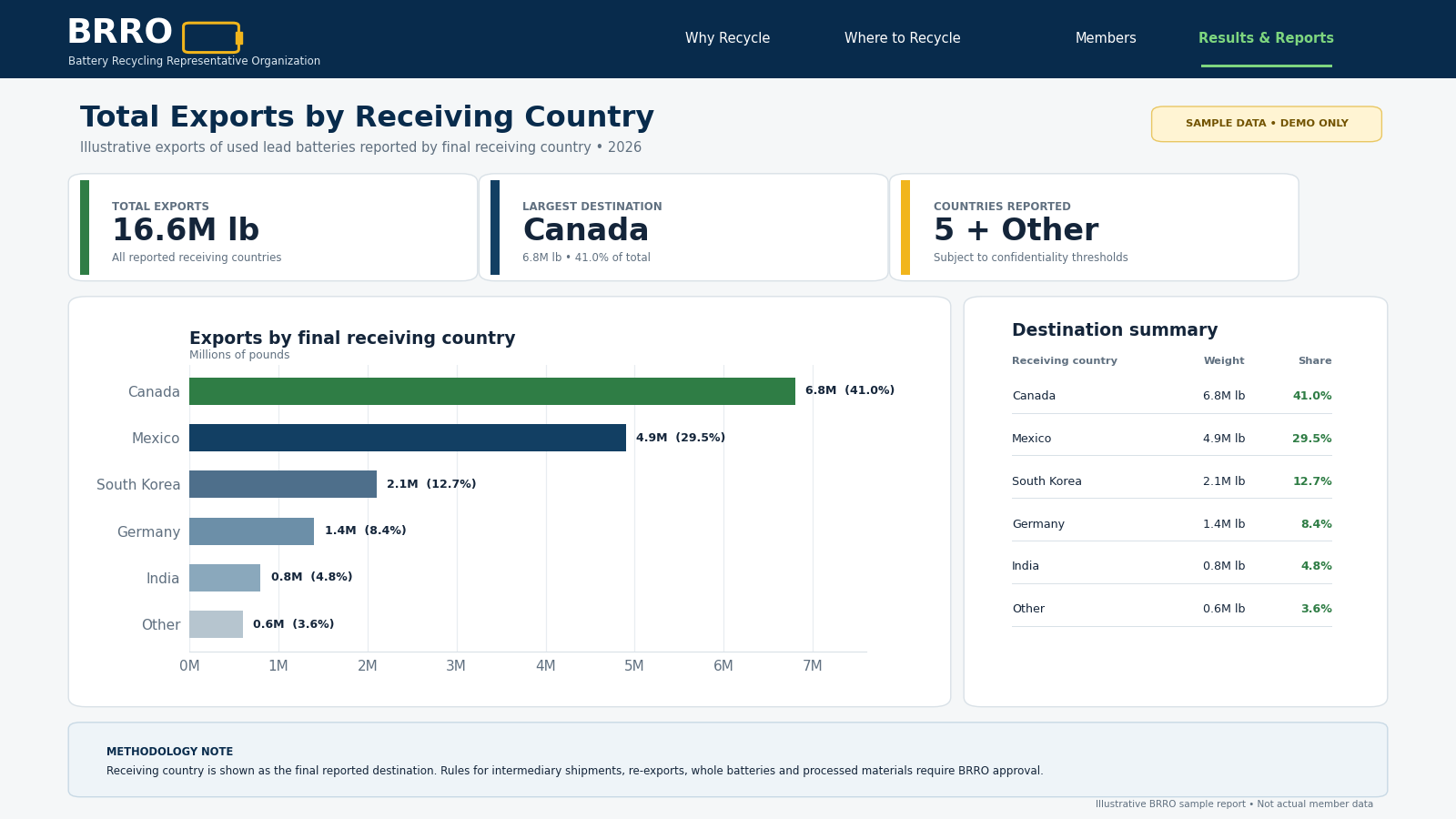
A sample view of exported battery material totals grouped by receiving country.
Figures are fictional and are intended for website and client-review mockups. Final reports will depend on approved definitions, validation rules, confidentiality thresholds and BRRO reporting protocols.
Quick answers
Always confirm acceptance and transportation requirements with the retailer or appropriate authority before visiting.
Begin with an auto-parts retailer, battery retailer or service center. Many states require certain battery retailers to accept used lead batteries, but policies can vary by location.
Acceptance requirements vary by retailer and state. Contact the location before visiting and ask whether purchase or quantity restrictions apply.
Keep it upright, prevent movement and protect the terminals from contact with metal objects. Seek specific guidance for damaged or leaking batteries before transport.
Do not mix battery chemistries. Check the label and use a recycling program designed for that battery type.
Learn more from BCI